
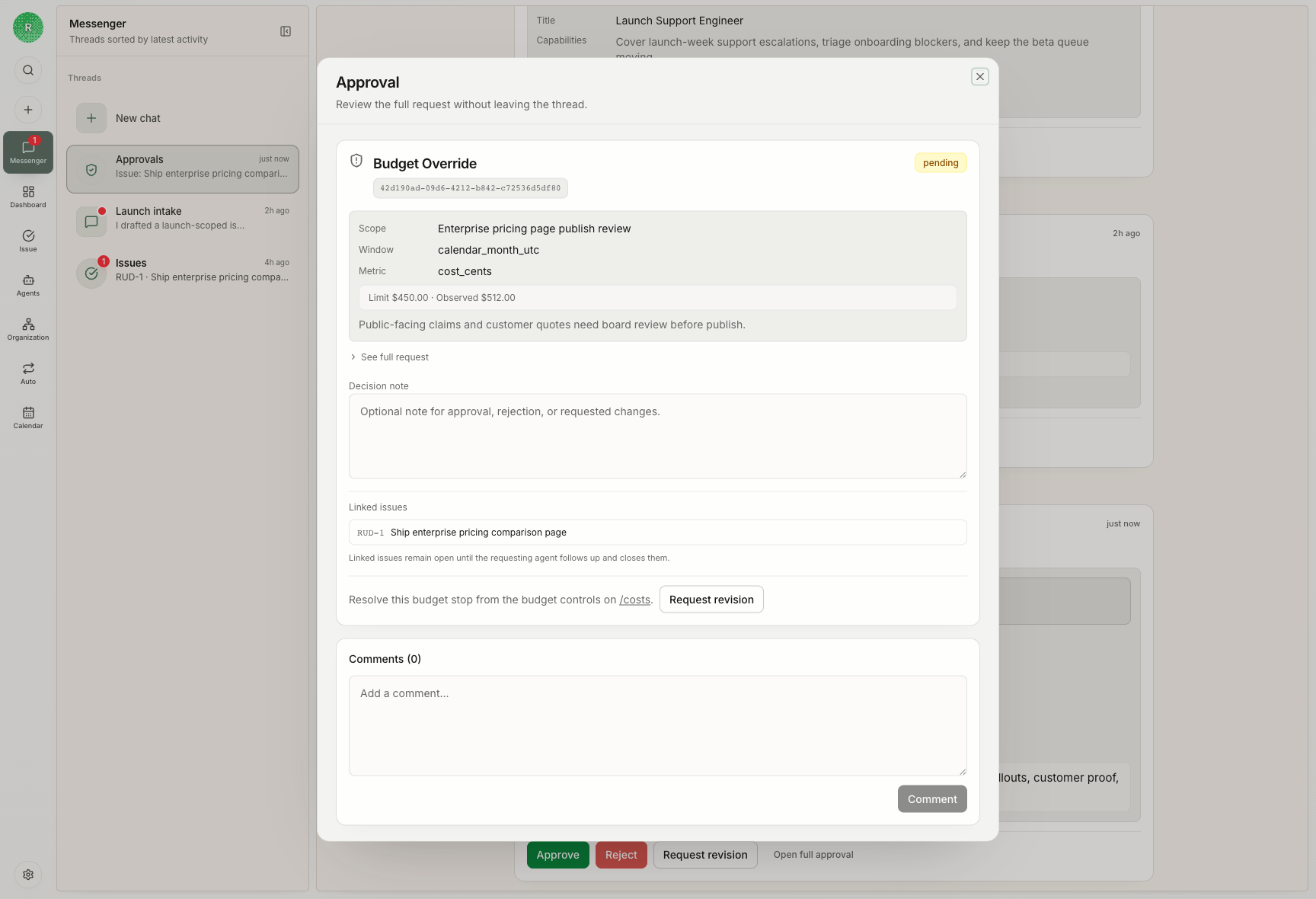
How they fit together
| Surface | Use it for | Move forward by |
|---|---|---|
| Chat | Intake, clarification, context gathering, and issue proposals | Creating or updating an issue when the request becomes executable |
| Messenger | Replies, issue threads, failed runs, blockers, reviews, budget alerts, and decisions | Returning to the linked issue, run, or thread with a clear next action |
When Chat should become an issue
Convert a conversation into an issue when it needs any of these:- one owner to execute the next step
- agent runtime budget
- review or approval
- a recovery point after failure or blocking
- a durable history the team can inspect later
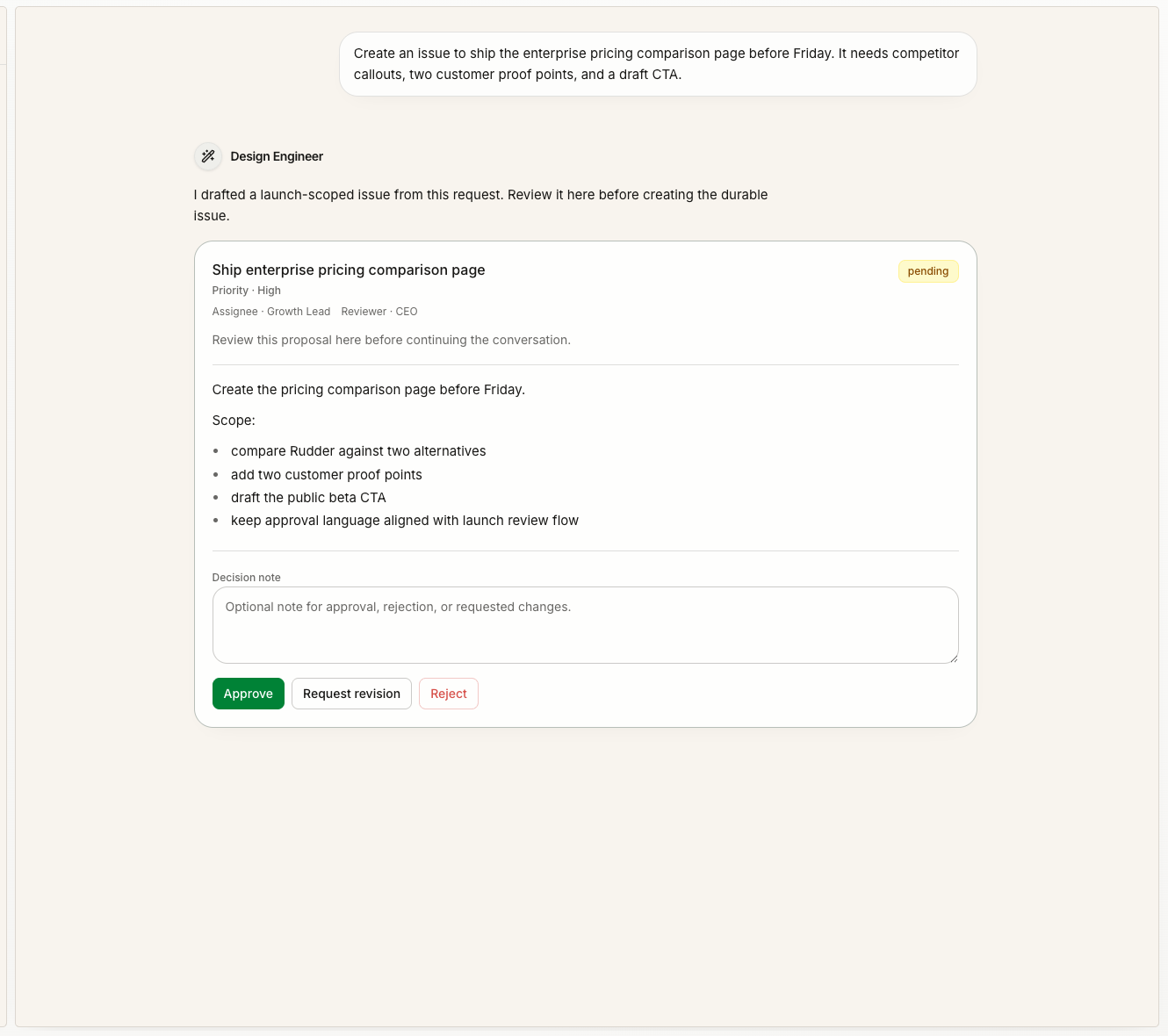
What Messenger should bring back
Messenger answers one operator question:What needs my attention right now, and which durable work object does it belong to?Use it to move from signal back to action:
| Attention signal | Durable next step |
|---|---|
| Agent asks a question | Reply, then keep the decision on the issue |
| Run fails | Open the linked issue or run and decide recovery |
| Work is blocked | Name the missing input or owner |
| Review is waiting | Approve, request changes, or mark blocked |
| Chat proposes an issue | Accept, edit, or reject before execution |
Anti-patterns
Avoid using Chat or Messenger as:- a hidden backlog
- a replacement for issue status
- a place to run long work without ownership
- the only record of a review decision
- a generic chat app disconnected from Rudder work
Next steps
Issue Lifecycle Guide
Learn when a request is ready for assignment and review.
Issues
See the durable execution object Chat and Messenger point back to.